
Enabling Global Sustainability Standards
Ergonomics & Human Factors Engineering
Safety Technology & Simulation Platforms
Council for EHS & ESG Excellence
Repetitive Task & Strain Analysis — OCRA/Strain Index
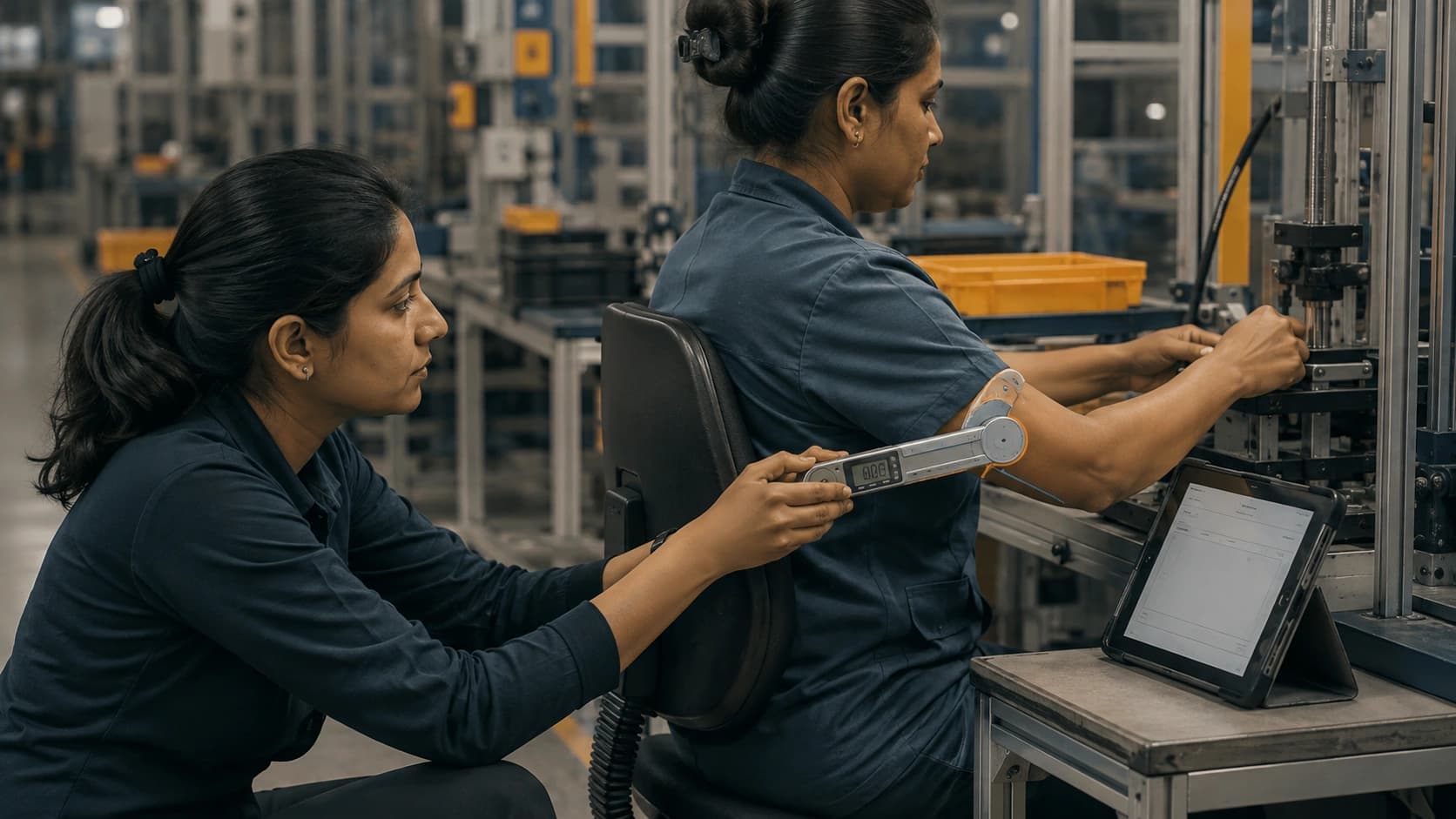
What is Repetitive Task & Strain Analysis — OCRA/Strain Index?
Repetitive Task and Strain Analysis evaluates tasks that involve frequent, repeated upper limb movements — assessing the cumulative physical demand placed on muscles, tendons, and nerves when the same motion is performed hundreds or thousands of times duri ng a working day. Repetitive strain is one of the most underrecognised ergonomic risks in manufacturing, assembly, food processing, and data entry environments — because the individual motion seems harmless, but the cumulative effect over days, weeks, and months produces serious and often permanent injury.
The analysis applies two internationally validated tools — OCRA, the Occupational Repetitive Action index, which calculates the ratio between actual and recommended repetitive actions per shift and provid es a risk classification — and the Strain Index, which combines six task variables including intensity of exertion, duration, and frequency to produce a composite risk score. Both tools are widely used in occupational health and ergonomics practice to iden tify upper limb disorder risk in repetitive tasks.
Repetitive strain injuries — including carpal tunnel syndrome, tendinitis, and epicondylitis — are among the most disabling and costly occupational health conditions in manufacturing. Once established, the se conditions are difficult and expensive to treat, often requiring surgery and extended rehabilitation. Identifying and controlling repetitive strain risk through structured analysis is significantly less costly than managing the consequences — and far ki nder to the people doing the work.
Speak to our Ergonomics specialist.
Our certified ergonomists are available across India. From workplace assessments to complete ergonomic redesigns, a conversation is all it takes to improve employee health and productivity.