
Enabling Global Sustainability Standards
Ergonomics & Human Factors Engineering
Safety Technology & Simulation Platforms
Council for EHS & ESG Excellence
Manual Handling & Lifting Risk Assessment
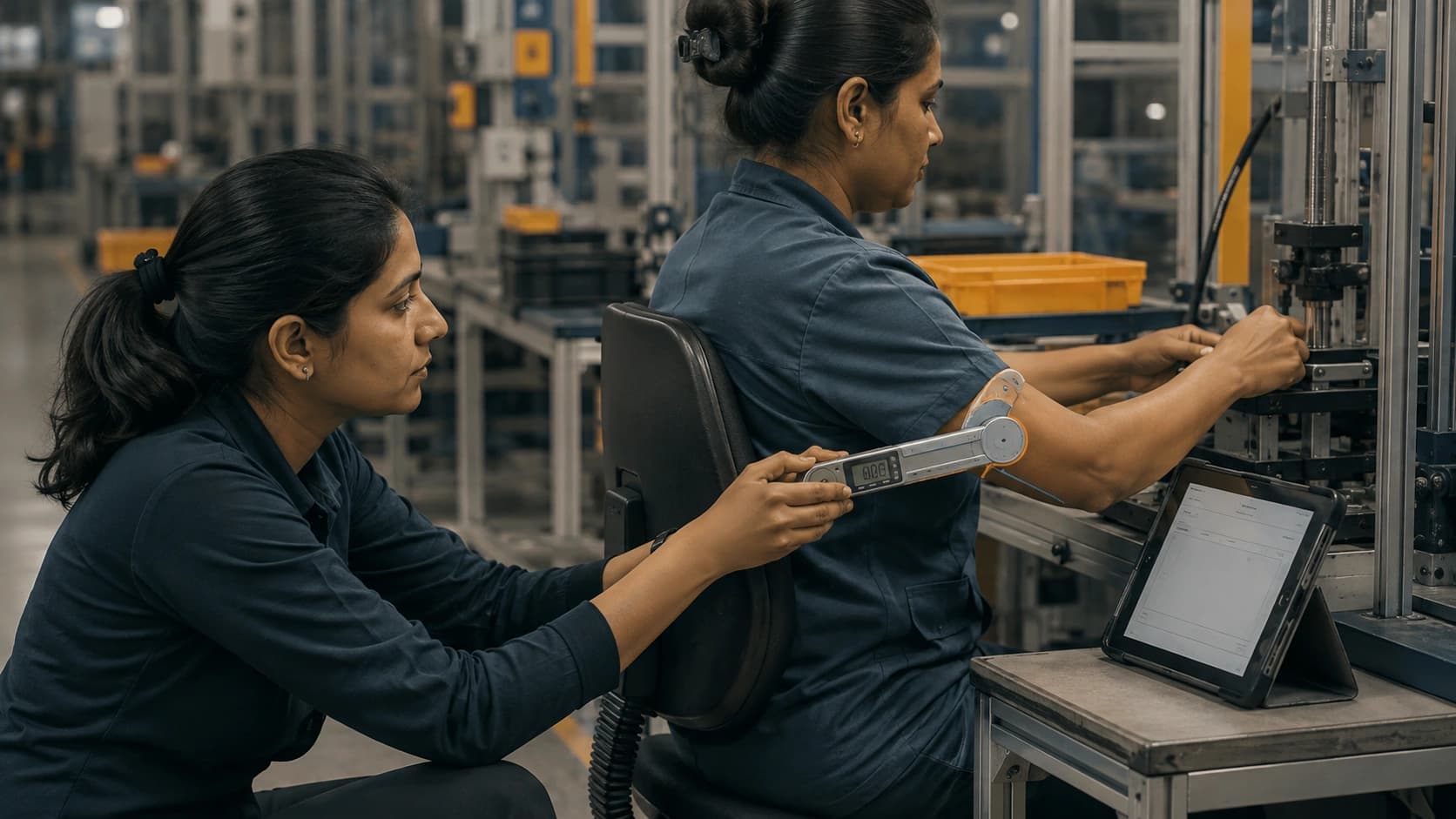
What is Manual Handling & Lifting Risk Assessment?
A Manual Handling and Lifting Risk Assessment evaluates tasks that involve lifting, lowering, pushing, pulling, or carrying loads — identifying the ergonomic risk factors that contribute to back injury, shoulder strain, and musculoskeletal disorders in wor kers who perform these tasks regularly. Manual handling is one of the most common causes of workplace injury in India — affecting workers across manufacturing, logistics, warehousing, healthcare, construction, and retail — and most of these injuries are en tirely preventable with the right assessment and controls in place.
The assessment is conducted by a qualified ergonomist who observes manual handling tasks in real working conditions — measuring load weights, lift frequencies, reach distances, posture, an d the working environment. Validated tools including the NIOSH Lifting Equation — which calculates the recommended weight limit for specific lifting tasks — and the MAC — Manual Handling Assessment Chart — are applied to quantify risk and identify priority actions.
Back injuries sustained through manual handling are among the most debilitating workplace injuries an employee can experience — often resulting in long periods of absence, permanent disability, and a significant reduction in quality of life. For organisations, uncontrolled manual handling risk leads to high injury rates, compensation costs, and regulatory exposure — all of which are avoidable with a structured assessment and a practical risk control programme.
Speak to our Ergonomics specialist.
Our certified ergonomists are available across India. From workplace assessments to complete ergonomic redesigns, a conversation is all it takes to improve employee health and productivity.