
Enabling Global Sustainability Standards
Ergonomics & Human Factors Engineering
Safety Technology & Simulation Platforms
Council for EHS & ESG Excellence
Environmental Assessments — Lighting, Noise, Heat Stress, IAQ
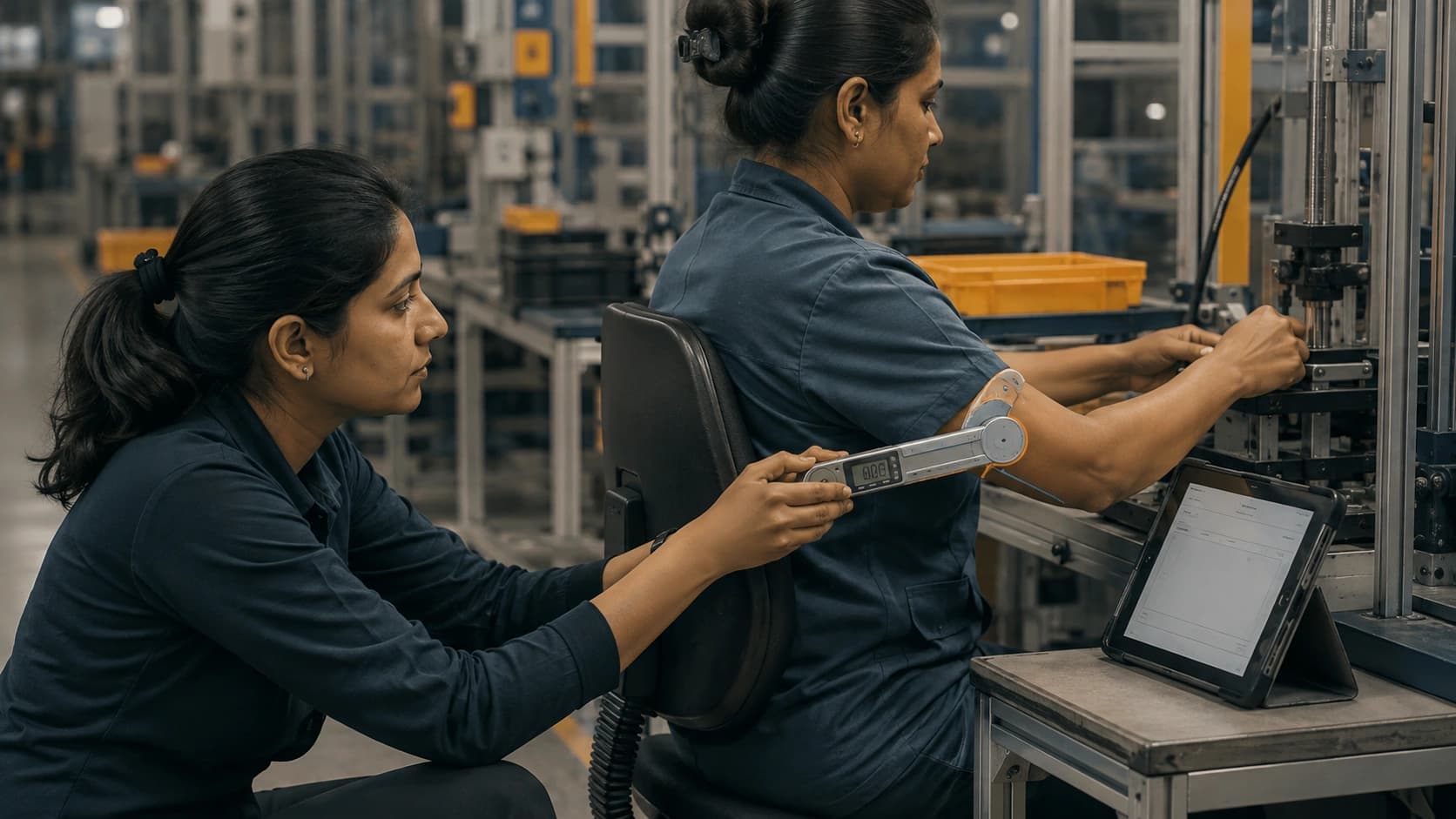
What is Environmental Assessments — Lighting, Noise, Heat Stress, IAQ?
An Environmental Assessment in the ergonomics context evaluates the physical conditions of the workplace environment — lighting levels, noise exposure, thermal conditions and heat stress, and indoor air quality — to determine how t hese factors are affecting worker health, comfort, cognitive performance, and safety. The physical environment is as much a part of ergonomics as the workstation or the task — a poorly lit workspace, excessive noise, extreme heat, or poor air quality all d egrade human performance and contribute to fatigue, error, and long -term health consequences.
The assessment uses calibrated measurement instruments — lux meters for illumination levels, noise dosimeters for occupational noise exposure, Wet Bulb Globe Temp erature — WBGT — monitors for heat stress, and multi -parameter sensors for indoor air quality parameters including CO2, particulate matter, temperature, and humidity. Measurements are taken across representative areas and shifts — compared against applicab le Indian Standards and international benchmarks — with a detailed report identifying areas of non -compliance and risk.
Workers exposed to poor environmental conditions experience measurable declines in concentration, accuracy, and physical performance — alongside increased rates of heat -related illness, noise -induced hearing loss, sick building syndrome, and occupational f atigue. For organisations, uncontrolled environmental risk means higher error rates, more accidents, increased absenteeism, and regulatory exposure. An Environmental Assessment identifies these risks with precision — and provides the evidence base for targ eted, cost -effective improvements.
Speak to our Ergonomics specialist.
Our certified ergonomists are available across India. From workplace assessments to complete ergonomic redesigns, a conversation is all it takes to improve employee health and productivity.